Virginia Home Grown
Community Gardens
Season 26 Episode 5 | 56m 46sVideo has Closed Captions
Explore gardens cultivating positive impacts in their neighborhoods!
Visit a farm in a public housing community providing fresh food and leadership training. Tour a garden at a rural hospital focused on improving food security and community health! Engage with us or watch full episodes at Facebook.com/VirginiaHomeGrown and vpm.org/vhg. VHG 2605 July 2026.
Problems playing video? | Closed Captioning Feedback
Problems playing video? | Closed Captioning Feedback
Virginia Home Grown is a local public television program presented by VPM
Virginia Home Grown
Community Gardens
Season 26 Episode 5 | 56m 46sVideo has Closed Captions
Visit a farm in a public housing community providing fresh food and leadership training. Tour a garden at a rural hospital focused on improving food security and community health! Engage with us or watch full episodes at Facebook.com/VirginiaHomeGrown and vpm.org/vhg. VHG 2605 July 2026.
Problems playing video? | Closed Captioning Feedback
Where to Watch Virginia Home Grown
Virginia Home Grown is available to stream on pbs.org and the PBS app.
Providing Support for PBS.org
Learn Moreabout PBS online sponsorship(upbeat country music) >>It's kind of like a half-production, half-educational garden.
We like to highlight some rare or uncommon veggie cultivars here, and it gives youth an opportunity to try out different vegetables that they haven't tried before.
>>As a healthcare institution serving Southern Virginia, we are a key part of this region.
We are here during times of stress, during times of joy.
Our inpatients and our new moms and their family members, our residents who have their space over here, they're able to look out of these windows, and everybody can be part of this garden.
All hands can touch it.
(birds chirping) >>Production funding for "Virginia Home Grown" is made possible by Strange's Florist Greenhouses and Garden Centers, serving Richmond for over 90 years with two florist shops, two greenhouses, and a garden center located throughout the metro Richmond area.
Strange's, Every Bloomin' Time.
And by Sally R. Youngs in honor of the Grateful Deadheaders Resident Interest Group, and by... (birds chirping) (joyful music) (joyful music continues) (joyful music continues) >>Welcome to "Virginia Home Grown."
As the drought continues in Virginia, it's never too late to practice water conservation with steps like applying mulch to protect the soil moisture in your garden.
Today we're talking about community gardens because they bring people together for a common cause, combating food insecurity.
Here's an easy-to-grow crop that I enjoy sharing from my garden.
It's cucumbers.
And to learn how to share your garden produce, contact your local cooperative extension office or food bank.
Community gardens typically grow the most popular vegetables, making them a wonderful resource to learn from.
So send in your gardening questions at vpm.org/vhg.
We always enjoy hearing from you.
A little later, we'll visit a garden at a rural hospital in South Hill working to inspire a healthier community.
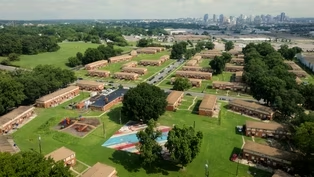
But first, Shana Williams explored Hillside Farm in Richmond with Groundwork RVA and discovered how a community garden in a public housing community provides benefits beyond the food produced.
Let's get going.
>>I noticed that many of your rows are segmented instead of one particular crop.
>>I do that for a few different reasons.
One, it's really easy for volunteers to plant in our garden on large planting days.
A lot of them are youth, so I don't wanna overly complicate things.
And I've also learned through practice that diversity is key in a production bed.
So I want to promote more companion planting.
The squash, I want something to grow around it to support it.
And so we really are planting three different plants in one area, like conventionally that you would normally do.
>>And then when you're transplanting things out, you can just simply plug in something in the bare spots.
>>Yes, there's always three different seasons in one area.
>>I noticed that you have cucumber melons growing up also.
>>Yeah, we like to highlight some rare or uncommon veggie cultivars here, and it gives youth an opportunity to try out different vegetables that they haven't tried before.
So we have a couple different cultivars of like a red okra, and we have different corn that we're growing seasonally, and it's fun to just try different things that you don't even see in the grocery stores.
>>I like the kale, the collard greens.
I like the cucumbers.
I like squash.
The key herb out here that I like that can help me with my health is the rosemary.
It's for my lungs, for my congestion.
It's good for me because I am on oxygen, and I like the mullein tea too.
>>We are a Black and brown youth-led environmental organization that focuses on environmental change in the communities that our youth come from.
We have a urban farm here in Hillside Court, one of our legacy housing communities in South Richmond, where we do everything from providing fresh fruits and vegetables to the community for free, to camps for kids, to farm teams of hiring youth directly from the community that are working here in the farm, direct community empowerment.
The vision for this space is truly to build out a space as the true community resource that it is.
The opportunity to sit under 100-year-old oak trees, commune with nature, just calm down a bit when life is just really stressing you, spaces that you can get food, just enjoy your community, that's the value that this space really provides.
>>While you might think that, oh, a beet is just a vegetable, it's actually really good for your heart health and your blood pressure.
So everything that's in here has five different uses.
You can use it, you know, for sensory to, like, calm you down, to chill you out.
You can eat it to help your blood pressure or your cholesterol.
A lot of these veggies help with diabetes, which is an epidemic in the area as well.
>>You have some celery.
You have some of your cabbage and other things.
Do you have to deal with any of the insects that, you know, especially that harlequin beetle that seems to wipe out mine?
>>I know.
>>I don't seem to see very many.
>>I don't wanna jinx myself.
We are pretty good on the pest management.
We're no spray, no till.
I don't know if it's the birds or just like as a whole, everything's really taking care of itself in this garden.
>>Well, you seem to be doing a fantastic job.
I see over in the distance you have a fruit orchard.
Tell me about that.
>>Yeah, so we have 75 fruit trees all planted over in the area here.
We get fruits from April all the way to October, ranging from pears, plums, peaches, apricots, figs.
We have a ton of apples, and everyone really loves to come over and harvest the fruits.
It's the best they've had.
They're really expensive in the grocery store, which isn't even around here.
But people can come in and harvest, like, some really delicious-tasting fruits that they wouldn't normally get to.
>>Yes, especially in the stores, they've already harvest everything before it's really ripened, so they're really getting a chance to taste some fresh food.
>>Yes, right off the tree, it's the best you'll have.
>>Definitely.
(both laugh) Now, Katie, this is a large area here, an acre and a half, I believe.
I know that you're not just managing this all on your own.
Please tell me how the youth are connecting and helping you maintain this garden.
>>So it is, a lot of it is me, but I will say our elementary-aged youth are some of the best workers I've had.
I call them my sprouts team.
They'll come out and be like, "Oh, we saw your car," and they'll run over and be like, "What are we doing today?"
So usually they're watering, which is a big help, but they love to weed and plant.
They'll come through.
They've made all my signage.
They're really willing to do whatever needs to be done here and get their hands dirty.
And they have like a sense of empowerment too.
They walk around and say, "I did that."
"I helped with that."
"I grew that."
So it's like pretty cool for them too to take ownership.
We also have a high school green team that has planted our bioswale, and they come through and do a lot of our environmental justice data collection.
And so they take this on as their yearly project, and it's very impactful positively like with the environment, socially, economically.
It does a lot.
>>Someone mentioned earlier that sometimes you gotta take a busload of 'em, and you do field trips places.
>>Yes, that is like a plus side.
I get to do some fun field trips, not all just farming.
So it's really hot here in Hillside.
I'm able to take our work vehicles, and we'll go to Taylor Farms Park, a splash pad.
We'll go to the river.
We're going rafting in a couple of weeks.
Yeah, so it's like they get the fun stuff and the hard stuff.
>>I love how the garden has so many varieties of vegetables.
Can the community come in when they just need something to supplement that meal and just harvest whenever they want?
>>This is their space.
I'm here throughout the whole day, but they'll come in and ask me, you know, what certain things are, how to harvest things.
We'll work on harvesting stuff together, but I really want them to feel autonomous in being able to take ownership of the space.
So people will come walk by during the day and say, "Oh, I harvested all that kale, all those veggies.
I made some soup last night."
And that just like makes me feel so good about it.
>>I can imagine it would.
>>So I'm just like, "Keep doing it."
(laughs) >>Yeah, that's great.
Now I need to know, how did you get them involved on a regular basis to wanna come out here?
>>It took some time.
It took a lot of trust building.
A lot of organizations come into environments like this and don't fully commit to what their mission and what they're doing.
I love the physical work of this, so I'm here every day.
And I think it took a lot of trust building with the community members, me showing up every day, and they know that they can trust me.
And so we'll like work together every day and, like, come together and do stuff.
>>I like the garden.
It's pretty.
And I love how Katie work with us, and we'll play games, play tag, play hide-and-go-seek and stuff in the garden.
It's lots of places you can hide at in the garden.
>>Tell me about your expansion plans for this particular site.
>>Our green team worked with the science museum, and they built us a cold frame so that we can eventually start growing things in the winter, start putting things in the ground earlier in the year, and making it to where we can have four seasons of crop production.
So I think it would engage the youth more as well.
>>You're doing a great job of empowering people.
>>Thank you.
>>Thank you, Katie, for everything that you're doing.
>>Our vision is to be able to not only duplicate this in other RHA communities.
We're working right now with RHA to renew our lease here for Hillside Court.
And we're looking at opportunities in Witcomb Court and a few other housing communities here in the city of Richmond as well.
Spaces to be able to cool off, spaces to be able to recreate, is paramount for communities like this.
And we're happy to be engaged as a part of that team that's helping to make that happen.
>>I always tell her what's going on, what the people come out here and what they like to pick and take home.
And I tell her what's not growing good and what is growing good and what's tasting good and what's not tasting good.
And this is our garden.
(laughs) (birds chirping) >>The garden is growing more than food.
It is nurturing everyone involved as it brings neighbors from multiple generations together.
And Shana, you've got some things that bring people together too.
So what do we have here?
>>So basically when we have so many people come out to the farm, we like to give them some kinds of gifts.
So what we have right now is some mint tea and also some hibiscus.
I love tea.
>>So let's get started, Peggy.
>>Yes, let's get started.
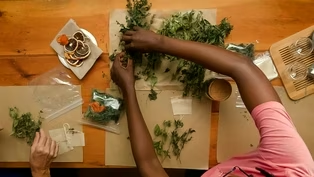
>>So before we do any of our demonstration, I'm gonna take some peppermint, some mountain mint, and a little lemon balm, crush it together just to get some of the oils out.
>>It is that simple.
>>Drop that in there.
>>It is just that simple.
A little bit of orange peel.
Hey, hibiscus makes things taste good.
Not everybody likes it- >>It is pretty.
>>But it is pretty.
So I'm gonna drop that in there, add a little hot water.
But you can also use diffusers.
You can use all different types of things, whatever that floats your boat that works for you, you know?
Typically, I would cover that up, allow those oils to be trapped in there and everything else.
I'm just making us just a little bit while we take this demonstration.
>>Fantastic.
>>Now, Peggy, what we have in front of us, we create little bags for people in the garden.
>>Okay.
>>Yes.
So we have, as I mentioned before, we have some peppermint here.
We have some mountain mint and some lemon balm.
Take some oranges, dry them, or just peel oranges and allow those peelings to completely dry.
>>And how do you dry them?
>>Basically, I'll cut them, plastic bins, put them upright in it, allow it to dry in a warm or in a room where it has a ceiling fan going.
Or I'll also take 'em up into my attic, put 'em on a piece of plastic.
It's hot up there.
Within two to three days- >>They're dry.
>>They're completely dry, yes.
And also in vases around the house.
>>Yes, simplest way.
>>You know, that works too.
Exactly.
It works really well.
>>Just don't add water.
>>Don't add water.
(Peggy laughs) Make sure they're completely dry before you put 'em in a container.
Sometimes, if you notice over there, I'll take 'em, and I'll grind them up completely, do some of my blends.
>>Oh, yeah.
>>And then it's easily accessible.
I can get it anytime I want.
But Peggy, let's dig in.
Let's make some of these for some people.
>>Super.
>>So we have our bags.
What I'm gonna do is go ahead.
I like to give people inside their little baggy some of these, which are the tea bags, exactly.
We'll put a label, tell them exactly what's going on inside of their bags so they can mix and match or just use one type of tea, whichever they prefer.
But so what we're first gonna do, Peggy, is this again is our peppermint.
We got our mountain mint.
We'll take sections of it.
So we'll just simply- >>And this is the lemon balm.
I'm gonna start with the lemon balm.
>>So we'll take sections of it like this.
I just break off parts.
I prefer people to actually see what everything is versus breaking it all down, and they can't understand possibly what's going on.
So we'll take some of here, some of our mountain mint, break that off, take some of our lemon balm, and then make sure you get at least one orange slice or orange peel.
>>Would you like that?
>>Thank you.
And I'm also, because I like things to look pretty, I'll put a orange slice in there as well.
So those are our contents, and that will go into one bag just like that for someone.
But I'll also do a different type, which is adding some hibiscus just like that.
So if you would like some, and you don't have to put that in your bag.
But again, we like to label things for everyone.
So, close that up.
It is simple as anything.
Take this bag.
We'll put our labels inside of it.
We'll put our little tea bags.
I like to just grab everything, shove it inside of the bag.
It doesn't have to be perfect because the whole objective is for people to really see what they have.
Put the orange slices in there.
>>Oh, this is nice.
>>It is cute, but you see, this is kind of weak.
I prefer giving people abundance, you know, because I really want you to be able to have tea at various times.
>>So you really fill the bag.
>>I really fill the bag up a lot.
>>I did not.
(laughs) >>I did not for this demonstration either.
But one of the things that I like to do for people is provide them with something that they can take away with, encourage them to start growing their own mint, and just uplift their spirits, you know?
It's a special thank-you coming from the garden.
>>Yes.
>>We also do something as well as we provide seasoning salts.
>>Okay.
>>And that's just using dried herbs and everything that comes from the garden.
>>And just pulverizing it with the salt?
>>Yeah, we'll just dry it just like we'll dry the mint, and then we'll just add different seasonings like thyme, rosemary, or whatever else and mix it up there together.
>>Sounds great, Shana.
Is that tea ready for us?
>>You know what?
Typically, it takes five to seven minutes to steep, but let's see.
>>Let's see.
Looks good.
>>Now, one thing that we have to realize is that our mint, when you mix it, oh gosh, lemon balm is nice and cool.
The hibiscus adds that color and tartness, and then our peppermint, smooth and mild.
>>Thank you, Shana, and now we can enjoy tea after time in the garden.
>>Cheers.
>>Cheers.
Oh, that's tasty.
>>That's good.
>>Yes.
And no sugar added.
>>No sugar added.
Fantastic.
And now we're going back to Katie at Hillside Farm to answer the questions you've sent in.
>>Katie, we have our first question from Lynda.
She wanted to know the various plants and herbs that you grow here.
How does it reflect the residents' cultural background?
>>So all of the plants here have been requested by the community members.
Before we do any planting, we survey the entire neighborhood.
We'll go around with flyers and I'll knock on doors and have conversations with everyone and I ask them what they want to see in the gardens, what they're interested in eating and growing, and so we kind of have a little bit of everything.
There's a lot of historically culturally appropriate crops that Southerners would eat.
We have some African crops that we grow, but a lot of it is, you know, our basics, tomatoes, collards, kales, and greens, and I grow everything off of the feedback of the community members.
So even halfway through the growing season, if they're asking me for something, I'll go ahead and plant it right then and make sure that they have what they want.
>>That's really nice, you know, and I also saw some okra over there too.
>>Yes, the okra's going off.
We're eating it fresh.
We're learning how to use it in different ways because, typically, people will say it was slimy.
>>Yeah.
>>But it is actually not that slimy right off the garden, right off the plant.
It's really crunchy and delicious.
>>I know.
I love doing that too.
>>Yeah.
I'm like, let me surprise you.
>>So what garden lessons surprise the kids the most?
Donna had that question.
>>There, you know, I think everything is kind of a surprise here.
We are in a really enclosed environment here.
We're surrounded by industrial spaces, so really anything that relates to the environment or the natural world is kind of a new thing here.
They're just really excited that they can just eat something right off the plant.
We had some kids here earlier who just came by and I call them grazers.
They'll just walk through and they'll pick whatever they want off the crops.
My biggest lesson is just controlling less, caring less about how things are looking, the presence of things, and the plants have been thriving more with less control and less input.
>>And then, truthfully, when you have that spontaneity and that lesson that, hey, you see a frog over there, and then you get to actually expose them to everything that's about it in its native environment.
>>Yes.
>>So spontaneity helps a lot.
>>Yes.
Yeah.
>>So our question is from Katie.
What's the funniest and the most memorable thing a child has said or done in the garden?
>>Oh, wow.
(Shana chuckles) There's a lot.
Kids are really funny.
I think, for me, it's always a surprise that young kids don't know where their food comes from, and a lot of the kids that came when I first started last year were thinking that the green tomatoes were apples.
So we had a full-on lesson on, like, where does our fruit come from?
What does food look like when it's grown?
So I thought that was really funny just to be like, oh my gosh, like, they thought that this tomato was an apple.
So I'm just like, wow, we have to talk so much about where our food comes from and the disconnect that's there, but the kids are hilarious.
They come down all the time.
I wouldn't say that they've really said anything super funny.
I can't think of any examples, really.
>>No, that's okay.
>>Yeah.
>>I mean, but I love that- >>I'm like, they're always funny.
>>But I love that you showed them that difference, you know?
And they got to actually see it in real time and apply it, so that's great.
>>Yeah.
>>Our question is, does Groundwork RVA need volunteers?
And if so, how would someone be able to become a volunteer?
>>Yeah.
We are always looking for volunteer help.
We have several different program areas with Groundwork RVA and we are actually looking for a youth program, a volunteer to help us with our bike shop, our green team, and at the farm.
A great way to look into those are on our website.
You can go on and we have a link for people to sign up for volunteer opportunities.
>>Yeah, that sounds great, you know?
Katie, I know that we sometimes will have a little side chat in some of the projects that you want to do.
What is one of those projects?
I know we talked about tea, but what is one of those other projects that you want to pull the community in on?
>>I specifically do a lot with dye plants and herbalism.
We harvested a ton of marigolds last year and I would love to show the community that they can make textile dyes and give them opportunities for entrepreneurship.
There's so many markets in Richmond that I really feel like there's a lot of people that could get involved with markets, making their own crafts, making their own textiles from things that they're growing in their own land and on their own yard.
>>Yeah, especially just simply making some fresh tea and trying it.
>>Mhm, yeah, some tea.
>>Even for the cooling towels, there's just simple mint, as we mentioned before.
>>Yeah, adding lavender into the cooling towels.
>>Yeah.
So here's another question.
Is the garden only for Hillside Court residents or does Groundwork RVA have other gardens?
This question came from Mary.
>>Mary, we technically don't have any other gardens right now.
We are hoping to expand within the next couple of years.
They will be just for the Section 8 housing communities that they're in, because we see that there's nothing around those communities that can supplement anything.
So, for right now, it is just for the Hillside community residents, and then we're hoping to move into Whitcomb or Gilpin Court and that would be specifically for those residents.
I think, big picture, 5 to 10 years, we would love to have community gardens throughout the entire city where we are autonomous in it and the community members are autonomous in it and they can come in and harvest whatever they need, whenever they need it.
>>Sounds great.
Thank you so much for taking the time to talk with us.
>>Thank you for being here.
(upbeat percussive music) >>We're here at the Bridgewater Church of the Brethren Community Garden, and one of the best things that you can have from your garden straight to your table is a fresh tomato.
There's just nothing like having a tomato picked hot off the vine to bring in to have with your meal, and tomatoes need a few things in order to be happy to grow.
They need good soil that's well drained.
Now, that could be in your garden or in a pot, and oftentimes you need a cage or a stake, some sort of trellis to support them, because tomatoes do like to get tall and leggy and they can flop over.
There are a few things though that a gardener cannot control in terms of making their tomatoes happy and that is the heat.
Tomatoes are a summer plant.
You want them to go in the ground when it's nice and warm, but sometimes our summers just get too hot, and days over 90, nighttimes in the 70s, and high humidity can really change the productivity of your tomatoes.
So if you look at a tomato's flower, it is a perfect flower.
That means it has both male and female parts and it does not require an insect pollinator.
Wind will do.
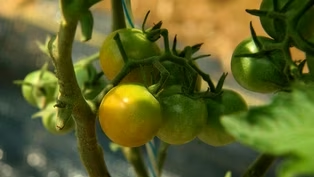
However, when we have those hot, sticky days and hot, sticky nights, just like humans getting hot and sticky, tomato pollen gets hot and sticky and it won't move, and the flower closes unfertilized and drops off and no fruit is set.
One of the things you can try to do is give your tomatoes some shade.
You could take an old sheet that you have.
You could use some of this row cloth.
You could go to the garden center and buy shade cloth, whatever suits you, and you're just going to kinda drape it over your tomatoes, using maybe the cage or the trellis to help provide some afternoon shade.
Another thing you can do to make your tomatoes happy is to water deeply and thoroughly in the mornings and make sure your soil is mulched.
You want to have something to help keep that moisture in.
I use a lot of grass clippings in my garden because that's what I've got when I'm doing some bagging in some areas of my lawn, and that provides a nice organic mulch that will let the water through and then prevent the evaporation.
Sometimes, I'm lucky enough to have some leaves left over from last fall, where I bag them and ground them up to put them in other places, and I've used that successfully as mulch again, and then one other thing you can use if you can get it are arborist chips.
This is when someone has an entire tree taken down.
So the bark, the tree, the leaves, the needles, everything's all in there together.
It's a nice, coarse mulch that's, again, going to let the water through when you water it, but then prevent the evaporation when it gets hot during the day.
So there are a few things you can do to make your tomatoes happy.
You want that good soil and then you want to water thoroughly in the mornings, keeping the water off the leaves, and having that soil mulched so the moisture stays in, and then using shade if you need to to try to keep your tomatoes from scalding.
I know, this season, I've had a few tomatoes scald.
It's like a sunburn on the tomato, and I'll just put these in the compost and then wait for some other ones to ripen up.
Enjoy your tomatoes and happy gardening.
>>I hope these tips provided insights to some of the challenges faced when growing tomatoes and steer you toward a successful harvest.
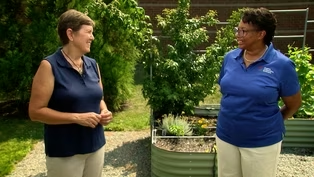
Next, we will tour the garden at VCU Health Community Memorial Hospital in South Hill to learn how Cooperative Extension, master gardeners, and hospital staff work together to inspire healthy eating in the community.
Let's take a look.
>>We're in one of Virginia's farming areas.
Industry is right here, literally surrounding us.
We do something called a community health needs assessment, and after interviewing our community team members and also talking with our employees, we realized that food insecurity continues to be rampant even in a farming region.
So we partnered up with the Virginia Cooperative Extension and said, how might we contribute to addressing food insecurity and improve the health outcomes of those in Southern Virginia?
So we realized that you can accomplish a lot in raised bed gardens and you can actually produce a lot of produce.
Last year alone, we contributed over 2,000 pounds to the local food group distribution network.
So food really is at the core of health prevention, health maintenance, and then even health healing, and this is that shared space for everyone to come and take part of it that lives in Southern Virginia or may just be passing through because they needed some services that we offer here.
>>This started actually in 2024 at a local civic engagement meeting, the Lions Club.
The president of VCU was presenting her 2025 to 2027 community health improvement plan.
>>Uh-huh.
>>And so, as I was sitting there listening, I said, "Wow, VCU actually has a shared vision and mission as Virginia Cooperative Extension."
So when sitting there, I decided, you know, I think this would be an excellent partner to address food insecurity in the area.
>>Well, a community garden is the best place to meet all of those needs, for sure.
>>Yes.
>>You had to have partners.
How did you develop those?
>>So I went out into the community with the message that VCU, CMH, and Virginia Cooperative Extension is embarking upon a mission to create a community garden in the area to address the long-term issues of food insecurity and people not having access to fresh food and produce, and so I shared that mission, and that passion spread across the community through local agencies, local farmers, local vendors, VCE staff, VCU staff, and just residents, the community at large, They all jumped on board to be part of this mission.
>>That is fabulous because I can't think of a better location for a community garden than outside the windows of a hospital.
>>Yes.
>>So how was it decided what to plant and what was planted?
>>So we actually had a meeting with the master gardener and we deliberately decided what vegetables, herbs, and beans that we would plant, and so our end final list was we had some tomatoes, cucumbers, peppers, okra, and the herbs, we had a fresh basil, chives, and sage, and then we had planted a series of beans.
>>Yes, and I also see roses because we've got a nest in one of them, so yes.
>>Yes.
And so our entryway was a beautiful rose awning and we also sourced from local vendors.
So just stressing again the importance of community and civic engagement, and being able to bring them into the fold.
>>That is awesome.
You know, for something particularly so community-based, coming from a site, to be able to then move it out into the community, to me, it's just one of the heralding blessings of this garden.
>>Yes.
>>But there's more because this garden is perfectly situated and there's a sitting area right there and people can see from the windows.
So was this site intentional?
>>Yes.
So, aside from being able to provide fresh produce for the community, this garden is also a place of change and transformation.
It's a place where nutrition education can happen, the sharing of knowledge and resources.
It creates a safe space for the community to come out and enjoy and have food demos and just learn about all the fresh produce that's in this wonderful garden, but aside from that, this community garden, Harvest For Health, is also part of the garden social ecosystem, and it fits into the overall ecosystem.
So it's a place where people can come and not only enjoy the fresh produce, but also just smell the aroma.
We have vegetables, we have beans, we have herbs, and that first raised bed, which is also ADA-compliant.
So it's also for patients that are in wheelchairs.
It provides that space for everyone to come out and smell and just, like in that front bed, we have two baby birds that's in there.
>>Isn't that a joy?
>>I mean, it's just a stress-free, safe environment for the community, and it is for everyone.
>>Yes, and it'd be a great place to come and have lunch.
I would love coming here.
>>Yes.
>>An early morning to come here because of the birds that are singing.
Where are we going with this for the future?
What do you envision or see happening in this site?
>>Well, since Mecklenburg County is, as well as much of the rural areas, we're in a food desert.
So many of the restaurants here are fast food, and my vision for this garden, along with our partnerships, is to be able to create a paradigm shift, a behavioral change, so that, you know, being that this is a SNAP-Ed initiative, is to help low income, is to help SNAP-eligible participants to be able to say, "I can come to this garden with a minimal budget and be able to go home and cook a fresh, healthy meal for my family as opposed to spending maybe $20 in fast food."
And so to be able to create those behavioral changes, it can address the issues and concerns that are in our communities, and maybe have less beds filled in the hospital, because it's all about prevention.
This garden represents transformative change and prevention.
If we learn to make our hand, whichever hand we eat from, our friend or our foe.
>>Yeah.
>>If we learn to take that hand that we eat from and reach into that garden and fix our plate, we can then prevent half of the chronic diseases that exist today.
>>Truly.
>>So my vision is for this garden to expand outward into the broader community and have people think about more healthy living, and one thing I love to mention, something that I learned while I was preparing this whole project, the soil is so important, and I learned not to say dirt.
>>Oh, thank you.
(Peggy laughs) >>I learned to say soil because we used a top-of-the-line soil, which was the VP400, and it was 1,500-pound bags of soil and we went through at least five or six of them.
>>Oh, yeah.
>>And just to know starting from the soil and how this just manifested into an abundance is a magnificent experience for anyone.
>>Definitely.
We'll just start with one community and one garden, and right here is a good place to start.
So thank you, Lenora.
Thank you for your idea and thank you for pushing it through and understanding how we could get this done and then succeeding with it.
>>Thank you for this opportunity to share.
In these small rural communities or larger rural communities, we really have to remember the power of community engagement, the power of civic engagement, and that nothing happens in a vacuum, that it takes a entire community and village to start with an idea and have passion as a driver, and you can manifest that abundance with the garden.
(birds chirping) >>The garden in South Hill reminds us that success is measured by more than the harvest.
Success also is realized by the extent of community engagement.
And, Shana, we've been talking about veggies, and so I brought a few.
>>Awesome.
>>But what I wanted to talk about was the companion planting aspect of planting a vegetable garden.
You know, we just don't willy-nilly throw vegetables out into the bed.
I'm sure you don't either.
>>Sometimes.
>>Sometimes, okay.
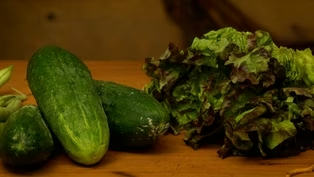
(chuckles) But I think with companion planting, the most commonly known one, the most popular one are the three sisters, with the corn, the beans, and the squash, with the corn supplying the height for the pole beans, the pole beans, of course, their roots actually, or they're able to capture nitrogen from the air and then release it into the soil as well as hold it in their roots.
Because corn is really a heavy feeder of nitrogen to be successful.
And then the squash comes along, or cucumbers, and covers the ground, which, of course, retains soil moisture, but also keeps critters out because of the spininess of their leaves.
So it's a great companion planting combination.
>>It really is.
>>It is.
But other companion planting combinations also work just as fine.
And I'll say the most in-depth combination deals with tomatoes and peppers as well as marigolds and/or, and/or, basil.
And let's talk about the basil first because that's really the most, I'll say, elaborate one to talk about.
'Cause when we plant tomatoes, our plants get very large.
It's a vine, and basil, of course, is more stout in its growth.
And so this is a good combination for height variations, where you can grow something tall and something short underneath.
And it also slows down the flowering process so the leaves can stay flavorful longer, all right?
The other thing is tomato roots go deep while basil roots stay shallow.
So even in the soil profile, you've got deep roots and shallow roots, so they're not competing for moisture.
And then finally, we've also got the fact that it's been proven that basil actually enhances the growth of tomatoes but enhances the flavor of them as well.
All right, now on a pesticide side, we've learned and have known for a long time that these plants actually, with their aroma, their fragrance, they actually confuse insects like whitefly and aphids.
And so the insects tend to shy away from the tomatoes, all righty?
>>That's how I grow 'em, basil and tomatoes together.
>>And you'd use a lot.
You don't put one at the end of the row and call it a day.
>>No, I have a whole row.
>>See, you're talking my tune.
>>Yeah.
>>Same with marigolds, though, that fragrance there, you know, it's got a pretty sharp fragrance too.
And so you want to put that into the garden 'cause it, too, confuses and actually draws in the aphids and the whiteflies, but it also draws in robber flies as well as ladybugs to take care of any aphids and other insects that might make it through.
So, and again, not just one at the end of the row.
>>Yeah, and I think you mentioned it's better to have the smaller ones rather than the large ones.
>>Absolutely.
The smaller, the better.
This is a signet marigold, and this is a French marigold.
And, again, with their roots, they actually put out biochemicals which reduce root-knot nematodes, which is a parasite in the soil that would ruin our crop.
Now, you want to attract pollinators, so we have zinnias as well to bring in some more of our pollinators 'cause we wanna be able to pollinate all those flowers so we have more vegetables.
But there's other combinations as well, and I'm sure you're familiar with them too.
>>Yes.
>>Yes.
Now, think about, again, we're talking tomato roots go deep.
So carrots grow very well with peppers and tomatoes.
But, also, carrots grow very well with lettuce because of this long taproot and the very shallow roots of the lettuce.
And the lettuce and the carrots will kind of shade each other out because both of these are cooler season crops.
So when our temperatures get to 90 like they are right now, our soil temperatures, these two plants don't thrive well.
But they do need a little bit of shading.
And then believe it or not, if you can put your cucumbers up on a trellis so they're, you know, growing up and not sprawling on the ground, then lettuce and cucumbers grow well together.
Again, they benefit each other in that one provides shade for you to have lettuce further into the season.
>>And can we sprinkle the seeds for carrots later, knowing that the fall is gonna be coming, and they can start being prepared?
>>Exactly, matter of fact, mid-July is a great time to start sowing your carrots for the fall crop.
And you can intersperse it with those cucumbers as well.
Now, beans, which I mentioned already, are phenomenal plants, okay.
You have bush beans and pole beans, and you've gotta space them so they have good air circulation, particularly with the humidity we've been experiencing lately.
But, again, these are fantastic legumes, like peas, and they pull in the nitrogen from the air, go through a lot of processes within that plant, and put that nitrogen into their roots and nodules or exude it out into the soil some.
So a good combination of cucumbers and beans.
However, there's some bad combinations too.
Are you familiar with a very bad combination?
>>Yes.
(chuckles) >>I'll let you point out the bad combination.
>>So say, for instance, you got your beans and your onions; they don't like each other, but tell me why.
>>Okay, the reason is 'cause the onions actually have exudates, biochemicals that they push into the soil, and they last in the soil, and they hamper the growth of the beans.
They'll become very distorted, very short, and they won't produce.
However, the good news is that onions, which include garlic and alliums, all the alliums, which are your chives and things, grow very well with beets and carrots because those exudates actually protect these from insects like carrot maggot, which drills little holes all through your carrots.
>>Oh, yes.
>>Yes.
So companion planting does have its benefits.
Now, the other thing I'm going to share, just as a closing, is that watch your source.
Please always go to Virginia Cooperative Extension to get your information.
'Cause there's a plethora of information on the internet, and you want solid, factual, research-based info to follow so that you can succeed in your vegetable garden.
>>Yes.
>>Yes.
Have you used this in your garden?
>>I have, and you know, funny thing is I've even planted strawberries with a onion on the end, or I even put a bell pepper with strawberries growing up just to take advantage of the height.
And all of these is various combinations.
And I'll even put my, what is it?
My onions with my bell peppers.
>>Mm-hmm, mm-hmm.
So these are all combinations that you figured out work in your garden, and again, using guides to come through to that.
So good news, good things, easy practices to follow with just a little bit of advanced planting and planning.
>>And put basil next to everything.
>>Everything.
>>It tastes good.
>>Yes, it does taste good.
(laughs) It's a fav of mine too.
(laughs) And now we're going back to answer your questions with Kate Griffin, one of the volunteer master gardeners that tends to the "Harvest for Health" community garden.
And remember, you can submit your questions any time at vpm.org/vhg or on Facebook.
You know, we always enjoy hearing from you.
And our first one, Kate, is from Donna.
And she says, "What is a favorite vegetable here at the community garden?"
>>At the community garden, all vegetables.
But, of course, tomatoes are a standard, right?
Everybody loves them.
You can do so many different things with them, right?
They're great on a sandwich, but you can make these beautiful sauces.
So that's always an important one.
And the gardens I've worked in, that's always been one of the kind of core crops.
>>Well, what is your favorite vegetable though?
>>I love tomatoes.
I love squash.
I love to grow cucumbers because they're cool and crisp and juicy.
Or you can turn them into pickles or add them to any salad, and they're just always, they bring that nice light, crisp, cool flavor to them.
>>Oh, it's refreshing.
>>It is.
It's very refreshing.
We've been growing green beans this year and, wow, straight out of the garden is a lot different than it is from the grocery store.
>>Absolutely.
My grandchildren love to come into my garden.
>>Right, and just pick- >>Nosh on green beans.
>>Nosh on whatever.
>>Yep.
Here's another one though.
Beyond food, what else does this garden provide for the community?
Or any garden, yeah?
>>Or any garden.
Well, for me and many of the other master gardeners who work in the big garden, we donate all that produce.
And that is a fabulous thing.
Because you feel like you're working with the earth and working with everything nature's giving us, and you're then able to share that with people who need it, most of the time, or with people who just appreciate getting the fresh produce, because they don't have gardens.
They have an apartment, or they just can't do that kind of work.
And I think that is a full circle that I think is really important to many of us to see that and be a part of the cycle there.
>>Well, it's a health on the giver, and it's- >>A health on the- >>a health on the receiver.
>>Exactly.
>>You know, it's a win-win on everybody's part.
>>It is, and you're right.
Health is the right word, right?
Because it's valuable to you internally.
It's valuable to them internally and nutritionally.
>>Yes.
>>Right, and- >>Especially coming straight from the garden.
>>Exactly, exactly.
>>Yes, yeah.
>>And kids who've never had fresh produce learn the difference between that and something out of a can.
>>Yes.
(laughs) >>That's a big deal.
That's a really big deal.
>>Yes.
>>And it's fun to see them do that, and to come and help pick and see what it really means.
>>I loved it when I was working at Maymont, and families would come to help in the vegetable garden.
Because they get the children involved.
>>Involved, right.
>>They learn so much, they absorb so much, and they help so much, but then they get engaged, and who knows where that brings them in later years.
>>It's true, and you get the ones who don't wanna touch anything 'cause it's dirty, or they're afraid of the bugs.
But once they get used to it, it's like, okay, that's gonna stay with them forever.
>>Truly.
>>Right?
>>Such a life lesson.
>>It is.
>>Yeah.
>>It is.
>>So all right, now we're gonna talk math.
How do you track what comes out of this garden or any community garden?
>>Ah, in a community garden, we weigh everything.
Everything that comes out gets weighed and tallied at the end of the season.
So we know how much we've had of each different crop, and we know how much we've had in total.
>>Oh, wonderful.
>>Yes.
And that's something we've encouraged them to do here.
And it's how you know if you've done well.
It helps you also think about, okay, well, if we look at last three years running, these three things did really well, these two didn't.
We need to switch it up, or we need to change something in where we're planting them or what companions are closest to them or what water they're getting.
So you learn a tremendous amount by keeping track of all that stuff.
>>Yes.
Companion planting is real.
>>It feels like stuff.
>>Yes, yes.
>>Right, right.
It's data, and the world runs on data.
Well, so does our garden, in some respects.
>>Truly.
>>Right?
>>Well, I know, in my garden, if I put a plant in one square, and it doesn't do well- >>Do well.
>>I'm gonna switch it over to the next square.
>>Move it.
>>Yeah, yeah.
>>Exactly.
And it doesn't have to be very far.
>>No, and at home, I don't have to weigh it.
I look in the freezer.
>>Freezer, yes, yes.
>>'Cause I freeze everything.
>>I do that too.
I do too.
How much sauce do I have for the winter?
>>Exactly.
(both laughing) >>That's true.
>>And my husband's like, "You're planting more tomatoes?
We've still got the freezer," you know?
So we give those away.
>>Yes, I do too.
>>Yeah.
>>I do too.
My husband went out and bought me a freezer for the produce.
I was making so much pesto and sauce and everything else, yes.
>>Priorities.
>>Yes, exactly.
>>Well, this has been great talking with you.
And thank you for answering- >>It was fun to talk to you.
>>the questions from our viewers.
>>Well, I loved it, and I love just talking to you and getting more from a horticulturist.
(Peggy laughs) It's great to get more knowledge.
>>We have so much to share.
>>We do.
>>Yes.
(laughs) (Kate laughs) Thank you.
>>Thank you.
(upbeat music) >>During the spring and summer, everybody loved growing their veggies and herbs, but not everybody have the space to do so.
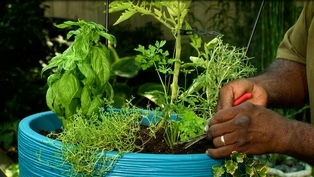
So today, I think I'm going to put together what I'm gonna call a pizza garden.
This will provide things that you could add to the top of a pizza.
And what I'm starting off with is this big container.
And I'm going to fill the container up with a mixture of potting mix that's mixed with some compost for some added nutrients.
So we'll get this filled.
And I think I am going to just dump this in.
I want to leave a little space because before I completely fill this, I'm going to add my tomato in.
So it will help it, so that more roots can grow.
I'm gonna get this out.
Going to break up these roots here and get this placed down into this container.
Now, since we're going to be covering this up, I don't need these shoots here, so I think I would just go ahead and cut those off.
And now I can finish filling up this container.
So now that that is tucked in, I am going to tie this tomato up to this support.
Now, you can use whatever you have on hand, if it's twist-ties, jute.
The thing I like about the tree chain, though, is that it's adjustable.
So you can just tie this on, like so, put this through the loop, and then you can tighten it down.
And if you got something that you notice starting to cut in, then you can just adjust this by loosening it up and taking it to a different bracket here.
Now, what goes along with tomatoes?
Let's try some basil.
Basil and tomatoes are a good combination together in dishes, and they go really well together on pizza, if that's what you want to do.
So we'll get this basil tucked in, and then we'll move on to the next herb.
So I've got some thyme, rosemary, and parsley.
I think I'm going to put the thyme towards the front of this container.
That way, it can just drape over the edge, freeing up some space in the center.
Next, rosemary, I'm gonna put that, again, over here towards this side just because this gets a little bigger.
Again, breaking up the roots.
Make a little hole here to put this in.
Then I can tuck it right into place.
And then a little parsley.
I will put that right here.
You remember, your herbs really like to be pruned, and you've reaped the benefits from that because you're using that.
Whenever you see basil starting to go to bolt then or bloom, then you wanna make sure you keep those cut.
And there you go, and you've got your herbs and a vegetable all in one container.
So you're saving space that you may not have.
You can even grow this out on a balcony.
So I hope that everyone would go out and try to grow some veggies.
>>What a wonderful planting of savory herbs.
They're equal parts flavor and aroma, and together they will create a culinary experience.
Community gardens are similar.
They bring together different resources and people from a community that blend together, nurturing those within the garden gates as well as those beyond the gates.
They build community connections.
So Shana, your garden has a special purpose.
Please, tell us about it.
>>Well, we're a garden learning center, so our objective is to inspire and teach people how to grow their own food.
So, but we do a learn by doing.
I don't wanna lecture anybody and get you out there and sit you down.
No, if we wanna do solar, here's a project.
You're gonna learn how to connect solar power.
If we're building a low tunnel, we try to give you different ideals.
Use your hands and power tools, to just gardening a whole lot of different ways.
But the whole objective is a learn-by-doing method.
>>Yes, I'm so impressed by all the rainwater you catch on your site too.
>>We have not used regular water.
We've just been using rainwater this year because we've getting tons of it.
>>Yes.
Now we are.
(laughs) >>Yeah, so even just from showing people how to connect solar power to just connect batteries to use it as pumps, just to water the rest of the garden is great.
>>Well, tell me about the planting part.
Because we all learn as we garden.
You know, I right now have a situation with my eggplant.
I've got bacterial wilt, so I'll be solarizing my eggplant bed.
And I've done this before, but I'm gonna learn it in a new way to do it, in a raised bed rather than in the ground.
So even planting, how do you teach people or show people how about specific planting projects?
>>So the cool thing is, at various locations, we'll have something going to seed.
Like we had our carrots and our Swiss chard going to seed.
So say, for instance, as they're drying out, and I'm like, here, now we need to pull all these plants out; let's drop some more of those carrot seeds in there.
And even though it was summertime, it'll still stay wet.
It'll still grow because it can still be sitting around.
It doesn't have to grow right now.
In another month, those seeds will still be there.
They'll still grow up for us.
>>Exactly.
>>You know?
And that's exciting because they were like, "Oh, they will?"
Oh yeah, they will.
(chuckles) >>They will.
They don't go away.
>>They don't go away.
But it's fun to also have people walk through and dig up potatoes.
But also, at the same time is, hey, the potatoes are probably growing, but they're starting to wilt back.
What else can I do to that spot to be thinking ahead of what else I can put there?
>>What's the next step?
>>Or just take some of the seeds and just bury it back down in there again.
Or pull up all that lettuce, and then put some more of it down there, but just cover it, or put it in somewhere in the shade.
So it's those kind of things just to inspire you, but at the same time, give you that desire to say, "Ooh, I wanna go home and try this."
>>And I'll give you some seeds to get you started.
>>But that's great, Shana.
Unfortunately, we're out of time.
And I truly thank you for spending time with us today and sharing your expertise.
>>You're very welcome.
Thank you for having me.
>>Mm-hmm, and thanks to all of our guests today, and thank you for watching.
And remember that you can stay connected with me and the team by signing up for the monthly newsletter on our website.
Next month, we're highlighting peanut farming and tobacco grown by Virginia's tribes for ceremonial use.
And we will explore heritage crops from the commonwealth's rich agricultural history.
Send us your questions on those topics and other general gardening questions using our website or through Facebook.
And while you're on Facebook, check out a new Baking in Bloom tip from Chris Martin.
I look forward to being with you again soon.
And until then, remember, gardening is for everyone, and we are all growing and learning together.
Happy gardening.
>>Production funding for "Virginia Home Grown" is made possible by Strange's Florist Greenhouses and Garden Centers, serving Richmond for over 90 years with two florist shops, two greenhouses, and a garden center located throughout the metro Richmond area.
Strange's, Every Bloomin' Time.
And by Sally R. Youngs in honor of the Grateful Deadheaders Resident Interest Group, and by... (birds chirping) (joyful music) (joyful music continues) (joyful music ends) (logo tone)
 New
NewVideo has Closed Captions
Clip: S26 Ep5 | 6m 41s | Discover vegetable pairings to grow in your garden for a healthy and bountiful harvest (6m 41s)
 New
NewVideo has Closed Captions
Clip: S26 Ep5 | 7m 50s | Tour a garden at a rural hospital focused on improving food security and community health (7m 50s)
 New
NewVideo has Closed Captions
Clip: S26 Ep5 | 8m 16s | Visit a farm in a public housing community providing fresh food and leadership training (8m 16s)
 New
NewVideo has Closed Captions
Clip: S26 Ep5 | 5m 39s | Relax with a refreshing herb infused beverage after a day in the garden (5m 39s)
 New
NewVideo has Closed Captions
Clip: S26 Ep5 | 4m 14s | Create a container full of tomatoes and herbs to top homemade pizzas (4m 14s)
 New
NewVideo has Closed Captions
Clip: S26 Ep5 | 3m 33s | Learn why high heat slows tomato pollination (3m 33s)
Providing Support for PBS.org
Learn Moreabout PBS online sponsorship

- Home and How To

Hit the road in a classic car for a tour through Great Britain with two antiques experts.
 New Episode





 New Episode




Support for PBS provided by:
Virginia Home Grown is a local public television program presented by VPM